Last updated November 25, 2026
 Wrought iron
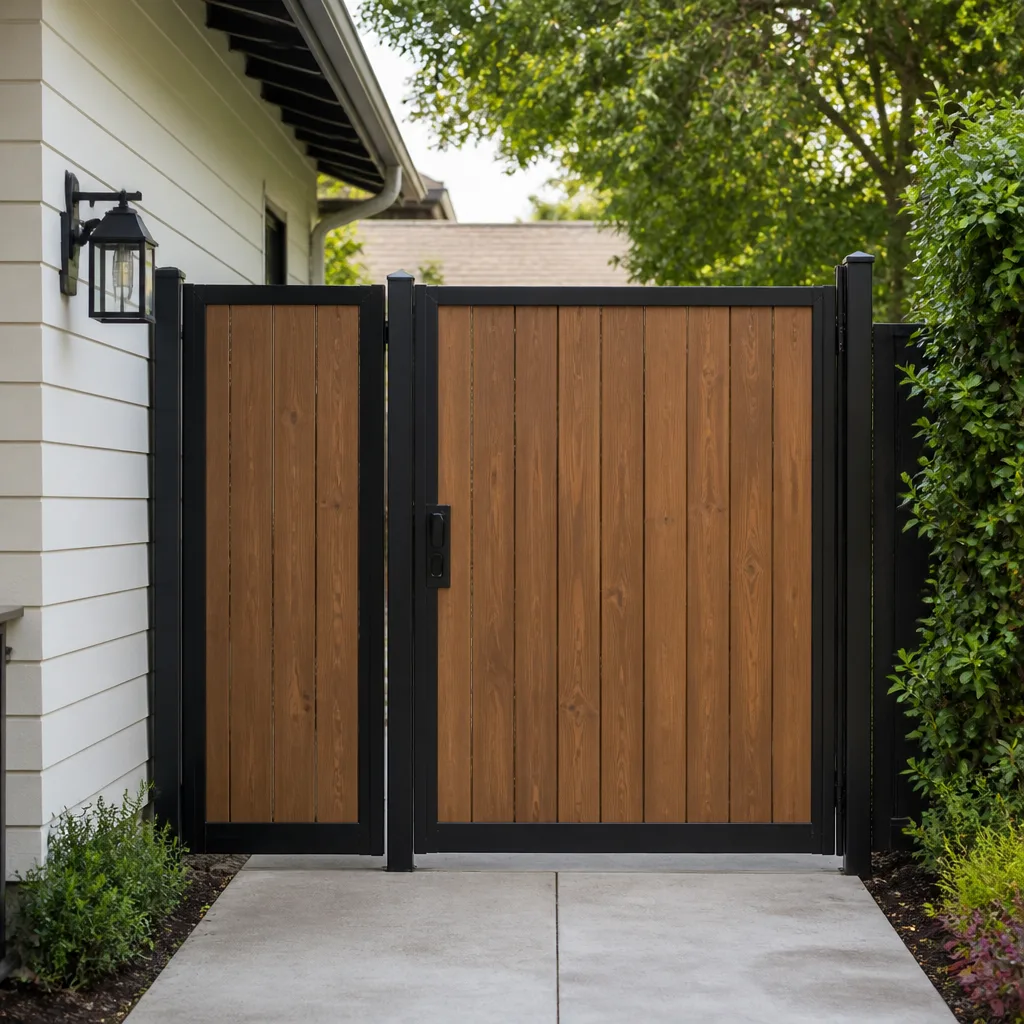 Wood & steel frame
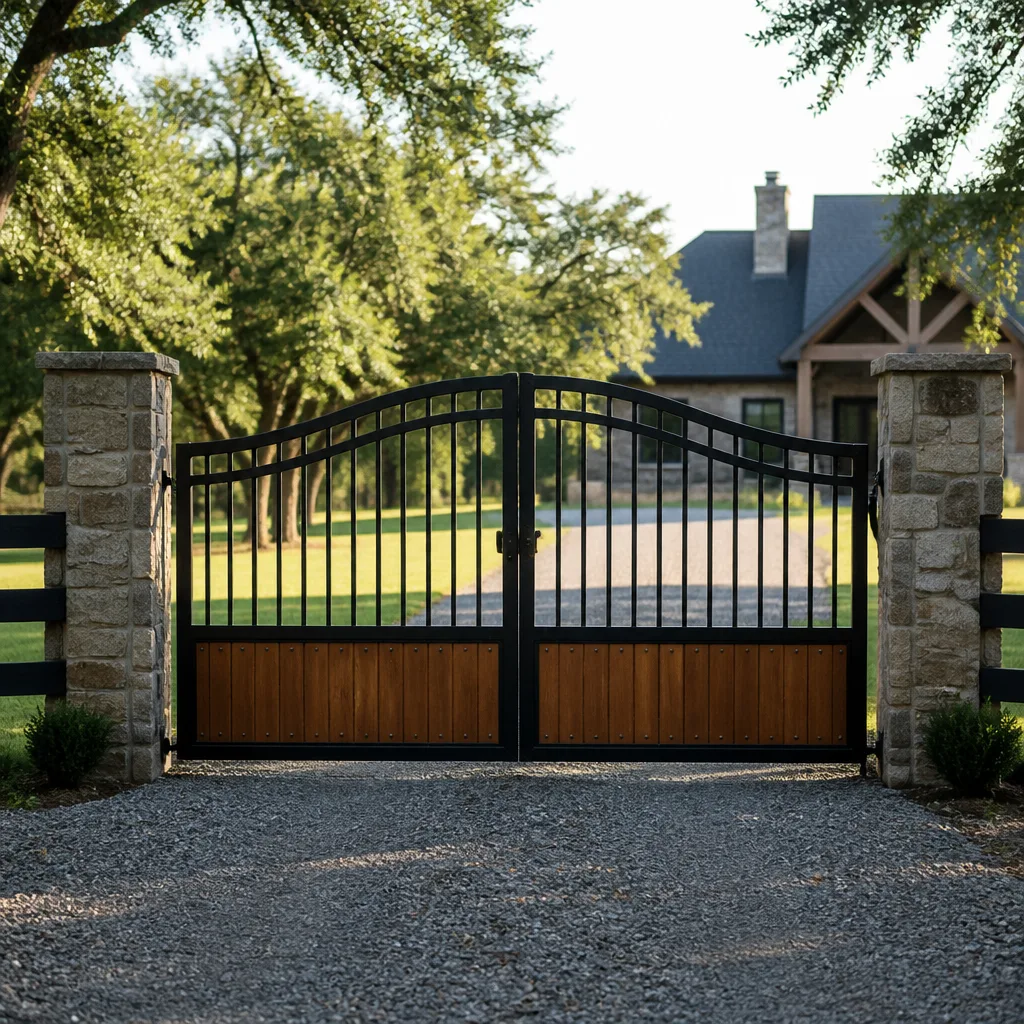 Farm & ranch
 Sliding driveway gates
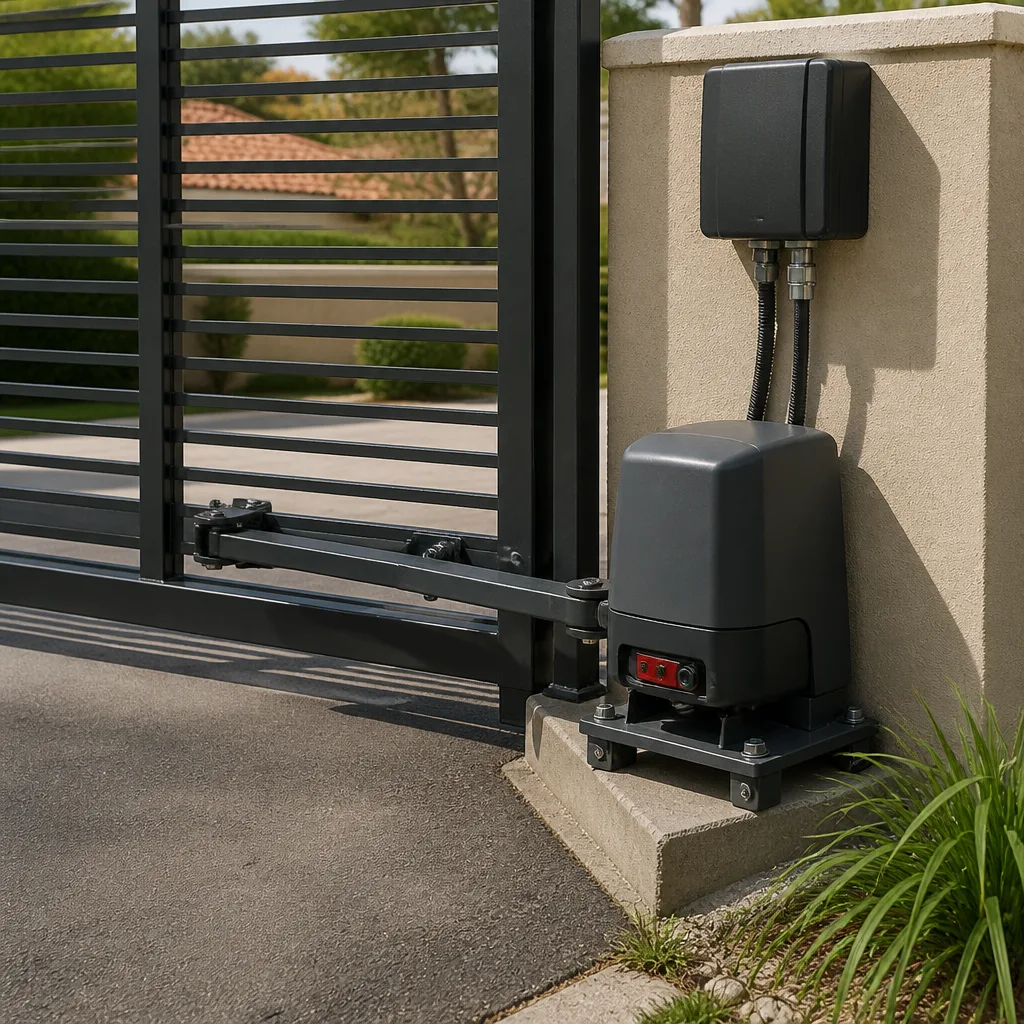 LiftMaster operators
Free on-site gate assessment - hinges, posts, and your LiftMaster or Nice gate operator checked before anything is quoted
The assessment is free and the quote is the invoice.
Get your free estimateDIY vs Professional Gate Repair: The Knoxville Homeowner’s Decision Guide
Adjusting a gate’s limit switches shows up on dozens of DIY blogs as an easy weekend task, and the adjustment itself really is simple. What those posts leave out is that setting the travel stops in the wrong spot runs the motor into its own hard stop every cycle, and that slow grind is how a motor dies early. The easy part isn’t the hard part. In our experience across Knoxville, the homeowners who get into trouble aren’t the unskilled ones, they’re the confident ones who didn’t know what the adjustment was actually protecting. This guide draws a precise line between the gate repairs you can safely handle and the ones that cost more to undo than to hire out. You’ll learn what’s reversible, what isn’t, and when calling a professional is simply the cheaper move.
Quick Answer
Some gate work is genuinely safe for a homeowner: lubrication, sensor cleaning, visual inspection, and reprogramming a remote. The rest, including limit-switch calibration, motor and opener service, entrapment-protection devices, wiring, and anything structural, is best left to a trained technician because a wrong adjustment can damage expensive components or disable the safety features your gate relies on. The smart approach is to do the routine maintenance yourself and call a professional for anything that touches travel limits, motors, or safety sensors.
Styles & brands we work with
- Wrought iron
- Wood & steel frame
- Farm & ranch
- Sliding driveway gates
- LiftMaster operators
Table of Contents
- Why the DIY vs. Professional Question Is the Wrong Frame
- A Task-by-Task Breakdown: What You Can Safely Do
- How to Perform Safe Homeowner Diagnostics
- The UL 325 Safety Standard and Your Liability
- The Parts and Tool Access Reality Check
- The Break-Even Math: When DIY Stops Making Sense
- What Voids a Warranty (and What Doesn’t)
- When to Call a Professional
Why the “DIY vs. Professional” Question Is the Wrong Frame
Framing this as a contest between saving money and spending it misses what actually matters. Nobody should hire out a task they can safely and correctly do themselves. And nobody should attempt a task where a small mistake wrecks an expensive part or removes a safety feature. The useful question isn’t “can I do this?” but “if I do this wrong, what does it cost, and can it be undone?”
That reframe matters in Knoxville because of how gates here are used. Driveway gates in neighborhoods across the city are motorized for a reason: they open and close many times a day, and much of that traffic is the same vehicle, the same routine. The motor and its travel settings get worked every single day, which means a misadjustment doesn’t sit quietly. It compounds. A gate that’s cycling against its own stop a few times a day wears a motor out slowly; a gate that’s doing it dozens of times wears it out in a season.
The safest homeowner tasks share three traits. They don’t change how the gate moves. They can be reversed if you get them wrong. And they don’t touch anything electrical beyond a switch or a remote.
Everything else falls into the professional column, and for good reason. Gate systems are a small ecosystem of mechanics, low-voltage controls, and safety sensors that all have to agree with each other. Adjusting one piece without understanding the rest is where DIY goes sideways. We’ve seen it enough in Knoxville to say it plainly: the mistakes are rarely about competence. They’re about not knowing which settings are load-sensitive.
A Task-by-Task Breakdown: What You Can Safely Do
The clearest way to decide is to sort gate work into tiers. Most of what a homeowner should touch lives in the first tier, and it’s more than people expect.
Tier 1: Safe and reversible for most homeowners
- Lubrication. Hinges, rollers, tracks, and the pivot points on swing gates benefit from routine lubrication. Wipe off grit first, then apply a small amount of the appropriate lubricant. This reduces wear and keeps the gate moving smoothly.
- Cleaning photo-eye sensors. Dust, pollen, and spider webs block the sensors that tell the gate something is in the way. A soft cloth and a look at the alignment is usually all it takes. On a gate repair visit, clogged sensors are one of the most common “it just stopped working” causes.
- Visual inspection. Walk the gate slowly and look for loose bolts, sagging hinges, rubbing panels, cracks, or debris jammed in the track. Catching these early is free.
- Reprogramming a remote. Adding or re-pairing a remote or keypad code is a homeowner task on most residential systems. The manual walks you through it.
- Clearing obstructions. Sticks, leaves, and gravel in a slide-gate track will stop the gate. Clearing them is safe and reversible.
Tier 2: Risky, load-sensitive, or irreversible
- Limit switch adjustment. This is the one that burns people. Setting the travel stops in the wrong spot runs the motor against its own stop, and the fix for a damaged motor is replacement, not adjustment.
- Opener and motor service. Opening a motor housing, replacing a control board, or resetting motor parameters is technician work. Load specs and calibration aren’t things you can eyeball.
- Entrapment protection and safety-edge devices. These must be calibrated and tested to standard. Improper adjustment creates real liability (more on this below).
- Electrical wiring and power runs. Anything past the low-voltage plug-in on a residential unit should be handled by a trained technician.
- Structural repair. Bent posts, failed welds, and sagging hinges that carry the weight of the panel aren’t a DIY fix.
Tier 3: Not really possible for a homeowner regardless of skill
Some parts are only available through authorized dealers or the manufacturer’s supply chain, and some brands lock down their own programming tools. That’s not a skill gap, it’s an access gap. We’ll come back to it in the parts section.
How to Perform Safe Homeowner Diagnostics
Before you call anyone, you can gather information that saves a technician time and gets you a more precise diagnosis. The key is to observe and document, not to fix. Do these before you touch anything.
- Describe the symptom precisely. “The gate won’t open” is a start. “The gate opens halfway and then reverses” is a lead. Note whether it’s closing or opening, how far it moves, and whether the motor sounds different than usual.
- Check the power. Confirm the breaker or disconnect for the gate is on and the control transformer has power. Don’t start opening panels, just confirm it’s live.
- Listen. A hum that never turns into movement suggests a mechanical bind or a stuck motor. A click with no movement suggests a control issue. Write down what you hear.
- Watch the sensors. Does the gate reverse when nothing is in the path? Does it stop only when the sun hits a certain angle? Sensor and photo-eye faults usually show up as intermittent behavior.
- Check the remotes. Does one remote work and another not? Does the keypad work? That narrows the fault to the remote, the receiver, or the control board.
- Look at the tracks and hinges. A visual pass over rollers, tracks, and hinges will tell you if the problem might be mechanical rather than electrical.
- Document the brand and model. Write down the brand name and model number from the motor label. This alone can shorten a diagnosis call.
Bring that information to the call. We work on Linear, Viking, Ghost Controls, DoorKing and the rest of what’s installed around Knoxville every week, and a homeowner who can describe the symptom accurately gets to a diagnosis faster. That’s a real head start, not a pat on the back.
The UL 325 Safety Standard and Your Liability
UL 325 is the safety standard for gate operators, and it exists because a moving gate can hurt people. It governs entrapment protection: the photo-eye sensors, safety edges, and sensing devices that tell an operator to reverse or stop when something is in the path. Those devices are not decorative. They’re the difference between a gate that stops for a child and one that doesn’t.
Here’s where DIY gets serious. Adjusting an entrapment protection device requires calibration tools and knowing what the device is supposed to do under test. Move a sensor’s field of view, change the reversal sensitivity, or bypass a safety edge because it “keeps false-tripping,” and you’ve taken away a protection the standard requires. If someone is injured and the device was improperly adjusted, the homeowner who adjusted it carries the exposure. That’s not a scare tactic, it’s how the standard’s protections work in practice.
This is also why we’re cautious about what we tell Knoxville homeowners to attempt. A gate on a commercial property or an HOA common area usually adds a layer of shared responsibility on top of the homeowner’s liability. It’s the kind of work that should show up on a technician’s report, not a homeowner’s toolbench.
We can tell you how the sensors work, what they’re supposed to do, and what a normal test looks like. We won’t give step-by-step instructions for calibrating them yourself, because a small mistake here is a different category of risk than a lube job.
The Parts and Tool Access Reality Check
Some gate problems can’t be solved by DIY no matter how skilled the homeowner, because the part or the tool simply isn’t available to the public. This is where a lot of “I’ll just order the part” projects stall out.
- Dealer-only components. Control boards, receivers, and some motor assemblies are supplied through authorized channels. They’re not stocked at the local hardware store or the big-box aisle.
- Brand-specific programming tools. Some commercial-grade systems (DoorKing is a good example) use tools and diagnostic interfaces that aren’t sold to homeowners. Even a competent DIYer can’t recalibrate a commercial operator without them.
- Load specs and calibration data. A limit switch’s correct stopping position isn’t a fixed distance. It’s set to the gate’s load and travel. Without the specs and the right test equipment, you’re guessing.
- Warranty-tied parts. On some systems, replacing a part with an aftermarket unit or a misinstalled control board affects the remaining warranty on the rest of the operator.
We carry parts for the brands we service, which is why a gate motor & opener repair that stalls on part availability doesn’t stall for us the same way. That’s not a knock on DIY, it’s the access reality. When the part is behind an authorized door, the question of skill stops mattering.
The Break-Even Math: When DIY Stops Making Sense
If gate repair were only about labor cost, DIY would win almost every time. It’s not, because the cost of a mistake has to be counted. That’s where the math gets useful. Use typical estimated ranges for the Knoxville market and remember that a written estimate from the technician sets the final price, not this guide.
- Lubrication and sensor cleaning. Runtime: 15-30 minutes. Cost of a mistake: essentially zero. DIY wins whenever you’re willing to do it.
- Remote reprogramming. Runtime: 10-30 minutes. Cost of a mistake: a re-do, not a repair. DIY is fine.
- Visual inspection. Runtime: 10 minutes. Cost of a mistake: zero. This is a homeowner task, always.
- Limit switch adjustment. Professional adjustment is typically estimated in the low-to-mid hundreds. Cost of doing it wrong: a motor and operator repair that runs into the several-hundred-dollar range. The break-even here is one bad guess.
- Safety-edge or sensor calibration. Professional cost: typically estimated in the low hundreds. Cost of doing it wrong: an unprotected gate and real legal exposure. This one isn’t a cost comparison, it’s a risk comparison.
- Motor and opener service. Professional cost: typically estimated from the mid-hundreds up, depending on the brand and part. DIY isn’t the alternative here, a botched job that needs a full replacement is.
- Structural repair. Professional cost: typically estimated from several hundred up depending on the work. DIY involves heavy panels and load-bearing hardware, and that’s a safety matter, not a money matter.
In practice, the break-even line falls where the repair involves load specs, safety devices, wiring, or heavy components. For routine upkeep it’s hard to justify a service call. For anything on the second half of that list, DIY stops being a saving and starts being a gamble. Knoxville homeowners who’ve watched us walk through the numbers usually land in the same place: they do the upkeep, they call us for the rest.
What Voids a Warranty (and What Doesn’t)
Warranty language varies by brand and model, so treat this as a general map rather than a rulebook for your specific system. The pattern holds across most residential and commercial gate operators.
Routine maintenance almost never affects a warranty. Lubricating hinges, keeping the track clean, and wiping down sensors are the kind of care the manufacturer expects.
Unauthorized repair is where the risk sits. Opening the motor housing and swapping a control board yourself, using aftermarket parts where the manufacturer requires genuine components, or rewiring the operator’s power run can affect the warranty on the affected component and sometimes on the whole operator. So can damage that traces back to a misadjusted limit switch: if the motor failed because it was running against a bad stop, that’s not a covered failure.
Professional service keeps the warranty intact. A technician can document the diagnosis, use the correct parts, and calibrate to load specs, and that record matters if a warranty claim ever comes up. That’s the part most homeowners don’t factor into the DIY math: the warranty isn’t just about the part, it’s about the evidence you can produce if the part fails.
When to Call a Professional
Call a professional when the work touches travel limits, the motor or opener internals, entrapment protection devices, wiring, or anything structural. Also call when the gate itself moves differently than it used to: slowing down, grinding, reversing unexpectedly, or stopping only at certain spots. Those patterns usually mean a load or calibration issue, and that’s the exact category where a wrong adjustment does the most damage. We also recommend professional help for commercial properties, HOA shared gates, and anything DoorKing, FAAC, or BFT-grade, where the tooling alone puts the repair out of DIY reach.
Knoxville Gate Repair offers free estimates in Knoxville, and we quote a price and agree it with you before any work starts. Call (844) 625-7626 and we’ll help you sort out what’s worth doing yourself and what isn’t.
Common Mistakes to Avoid
- Adjusting limit switches by feel. The correct stopping position is set to your gate’s load specs, not to where it looks close enough. Running the motor against its own stop long enough damages a part that isn’t cheap.
- Disabling a sensor that keeps false-tripping. A sensor that trips when nothing is there is usually dirty, misaligned, or reflecting off something it shouldn’t. Cleaning and realignment fix it; bypassing it removes a required protection.
- Ordering a part before confirming the diagnosis. A control issue and a mechanical bind can look the same from the driveway. Buying a control board when the problem is a stuck roller is a common and expensive miss.
- Using the wrong lubricant. Grease that attracts grit can make hinge and roller wear worse. Use a lubricant appropriate to the component, and apply it sparingly.
- Ignoring early mechanical warning signs. A little sag or a loose bolt is easy and cheap to fix now and expensive later. The visual inspection is free, so do it before a small issue becomes a structural one.
- Wiring a power run yourself. Anything beyond the low-voltage portion of a residential operator should be handled by a trained technician, and a homeowner’s hand in the wiring can affect both the warranty and the safety setup.
- Skipping the brand label. Not writing down the brand and model before you call slows the diagnosis. Linear, Viking, Ghost Controls, and DoorKing systems all have known quirks, and the label gets you straight to the right one.
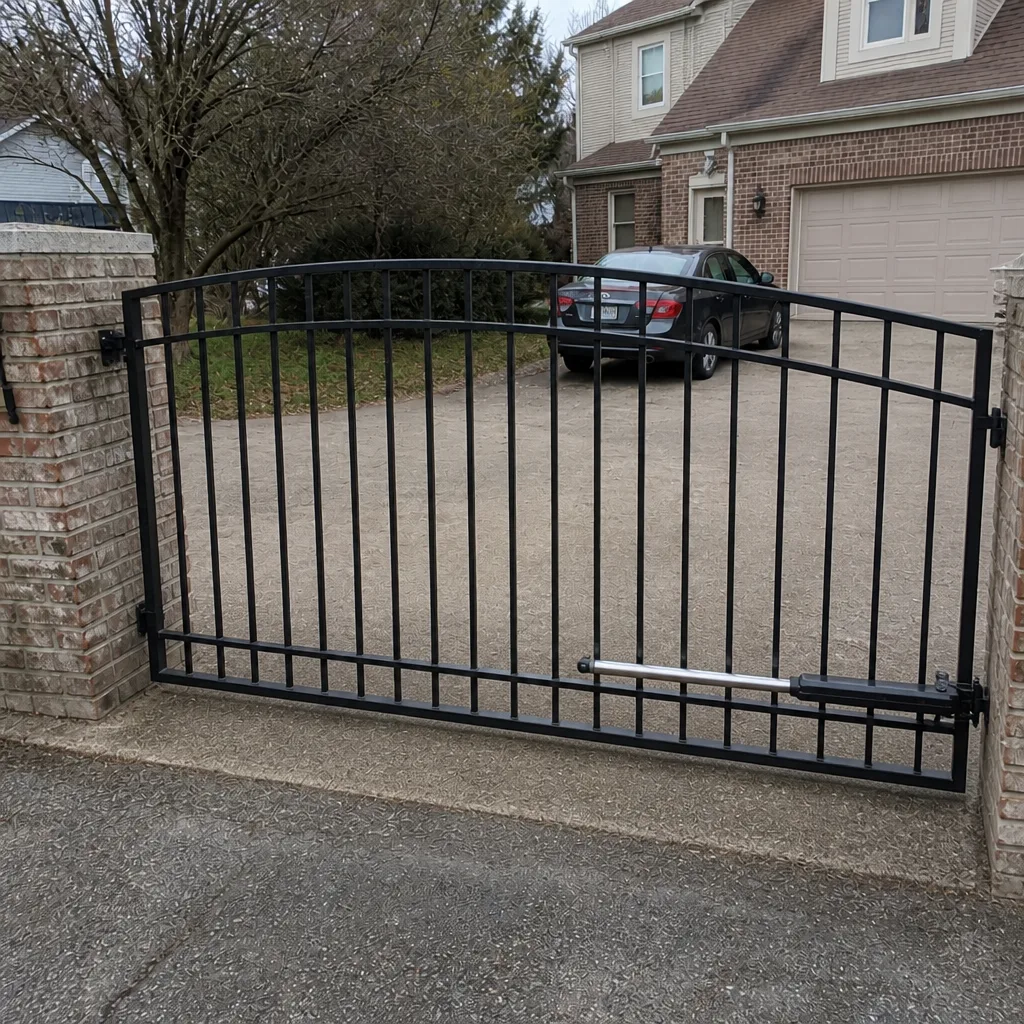
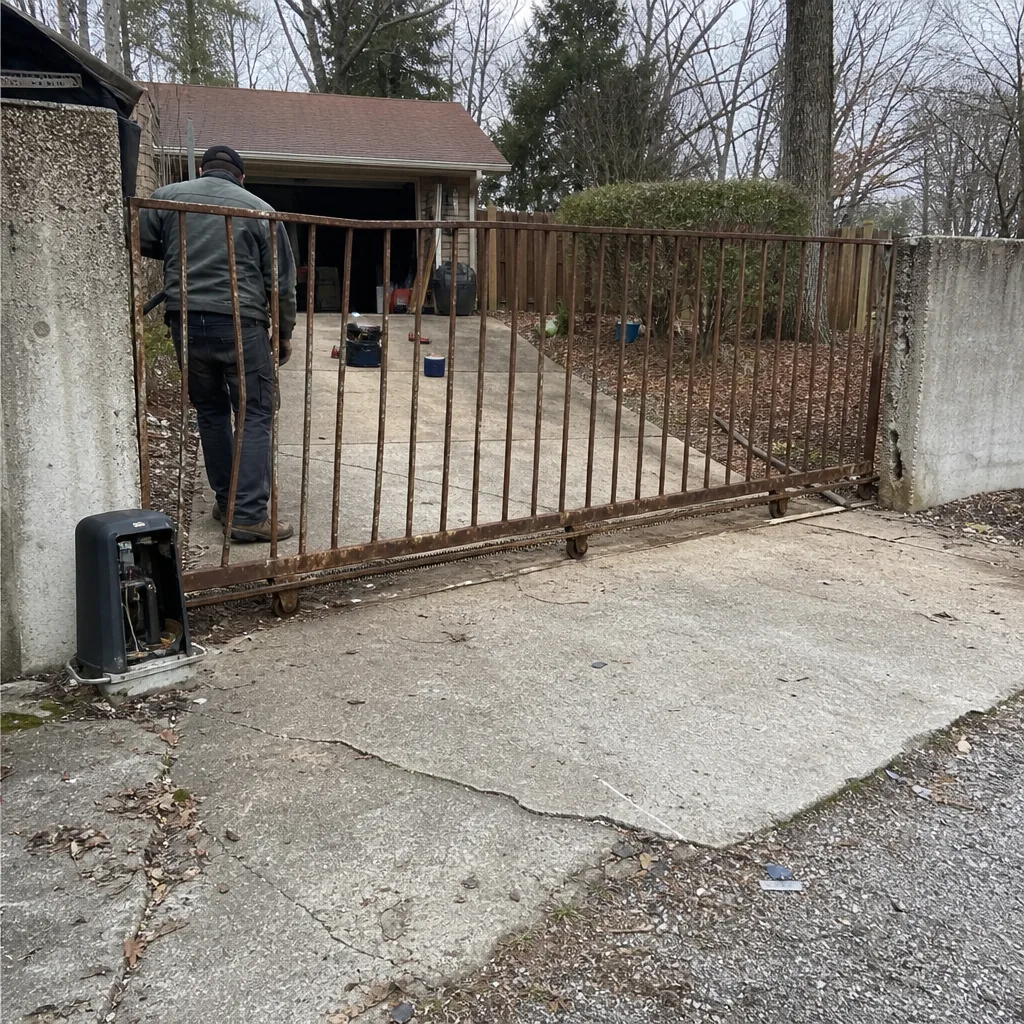
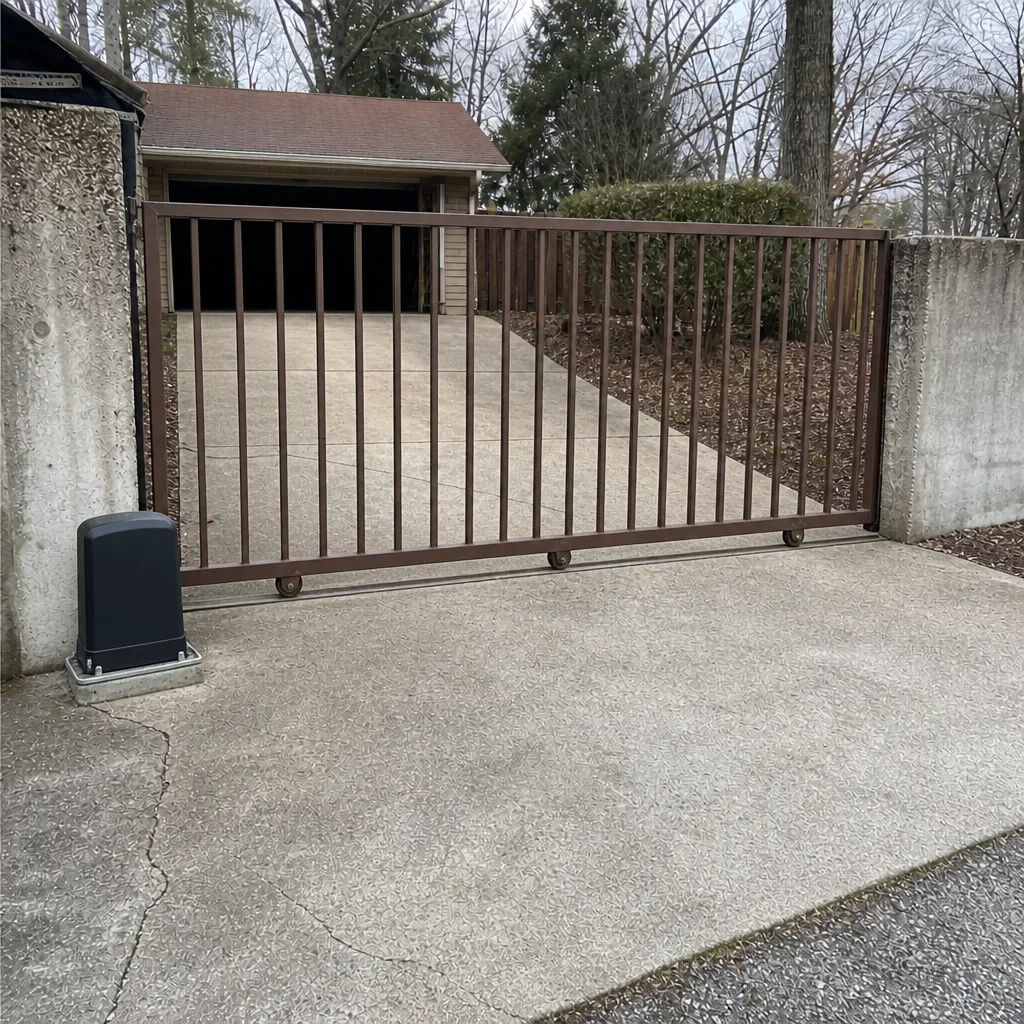
See the difference
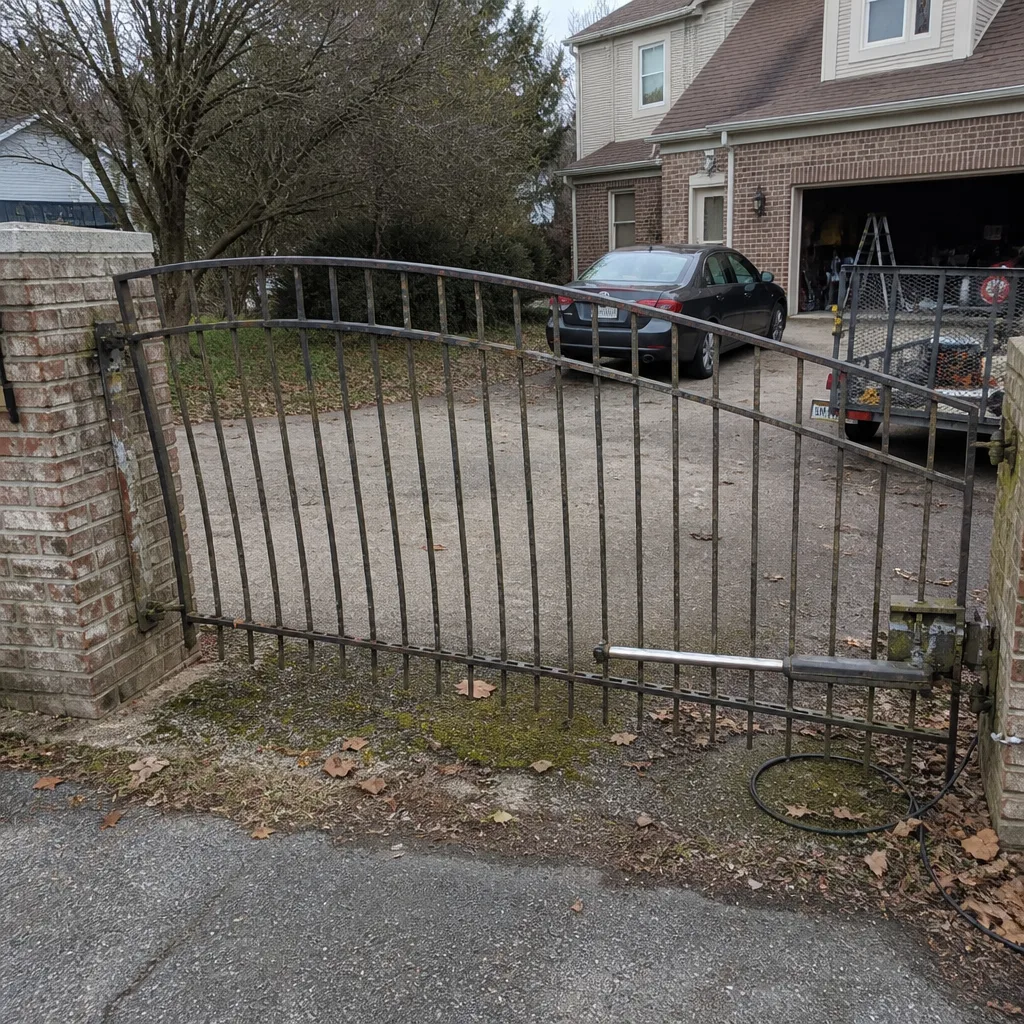 Before
 After
 Before
 After
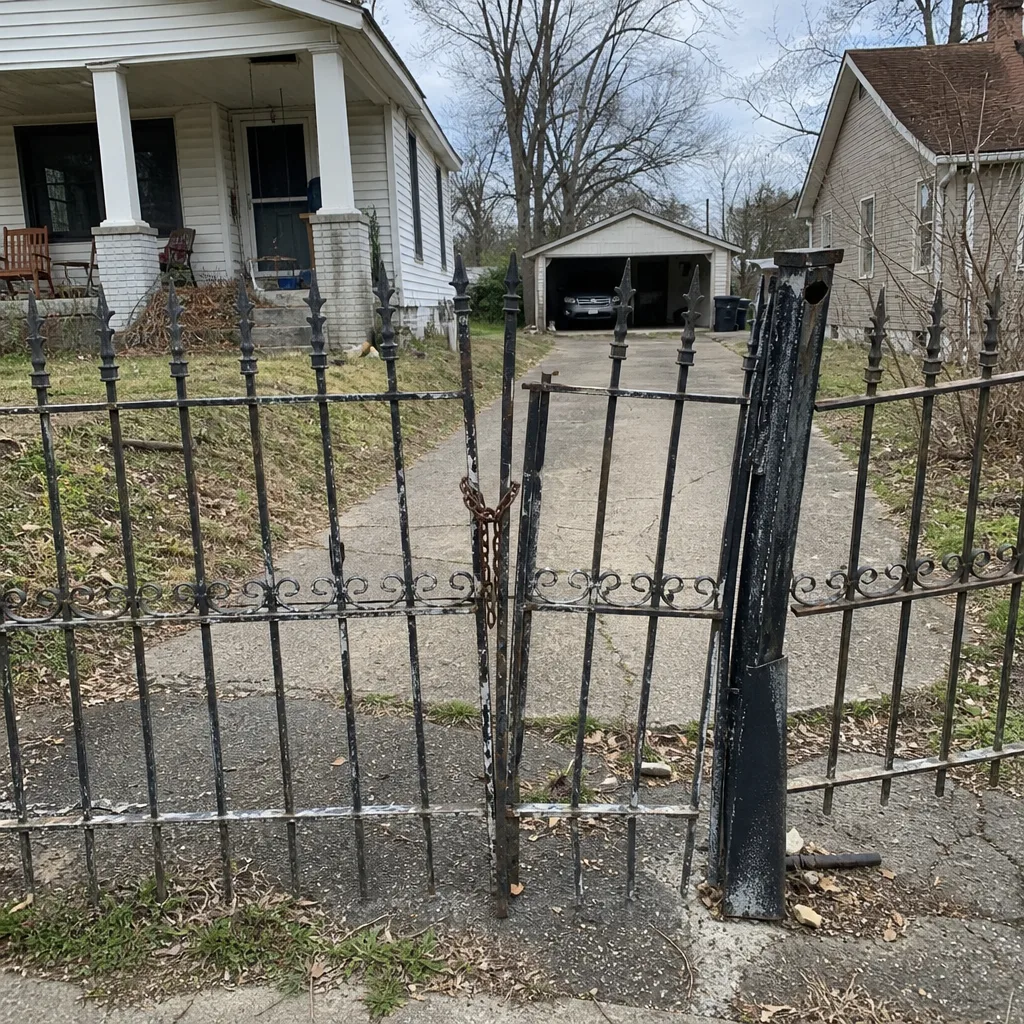 Before
 After
When to Call a Professional
Reach out when the gate’s movement has changed, when a safety device isn’t behaving, when the motor stalls or hums without moving, when there’s obvious structural damage, or when the system is commercial or high-cycle. A free estimate costs you nothing and tells you whether the repair is in your wheelhouse or a technician’s. When you’re ready to talk, call (844) 625-7626 and we’ll walk through the symptom, the brand, and the estimate. From a routine gate installation question to a full access-control cleanup, we can give you a straight answer on what the work involves.
Frequently Asked Questions
The adjustment is easy, but knowing the correct stopping position requires your gate’s load specs and a proper test, which is why we don’t recommend it as a homeowner task. A limit set wrong runs the motor against its own travel stop, and that damages the operator over time. Call a technician for this one; the estimate is free.
Lubrication, sensor cleaning, visual inspection, clearing obstructions, and reprogramming a remote are safe and reversible for most homeowners. These don’t change how the gate moves and can be undone. Anything that touches travel limits, the motor, entrapment protection, wiring, or structure goes to a technician. Call (844) 625-7626 if you’re unsure which side a specific repair falls on.
Routine maintenance like lubrication and sensor cleaning doesn’t affect a warranty, but unauthorized repair can. Opening the motor housing, swapping a control board, using aftermarket parts where genuine ones are required, or damaging the operator with a misadjusted limit can affect coverage. A technician’s documented diagnosis keeps the warranty intact.
Many gate components are supplied only through authorized dealers, and some commercial-grade systems use brand-specific programming tools the public can’t buy. That’s an access gap, not a skill gap. On a DoorKing or similar commercial operator, the tooling itself is part of the diagnosis. Call us and we can tell you whether the part is available to you at all.
It’s a question of liability, not a simple yes or no. UL 325 requires entrapment protection devices to be correctly adjusted and tested, and if a device was improperly adjusted and someone is injured, the person who adjusted it carries the exposure. That risk is why we recommend a calibrated professional test rather than a homeowner adjustment, even when the adjustment seems simple.
Gather the symptom first: what the gate does, when it does it, what the motor sounds like, and the brand and model from the label. Then compare the cost of a bad guess to the cost of a call. Routine upkeep is worth doing yourself; anything load-sensitive or safety-related isn’t. Call (844) 625-7626 and we’ll help you draw that line for your specific gate.
The Bottom Line
The DIY-versus-professional question sorts itself out once you ask what a mistake costs. Lubrication, sensor cleaning, visual inspection, and remote reprogramming are yours to handle, and doing them protects your gate. Limit switches, motor and opener internals, entrapment protection, wiring, and structural repair belong to a trained technician, because a wrong adjustment there damages parts, affects warranties, and removes safety features. For everything else, get a free estimate and decide from there. Knoxville Gate Repair is a gate-only specialist that works on the brands you’ll find across the city, and we’re happy to tell you what your gate actually needs. Call (844) 625-7626 for a free estimate, quoted and agreed before any work begins.
Written by the team at Knoxville Gate Repair.