Last updated November 25, 2026
 Wrought iron
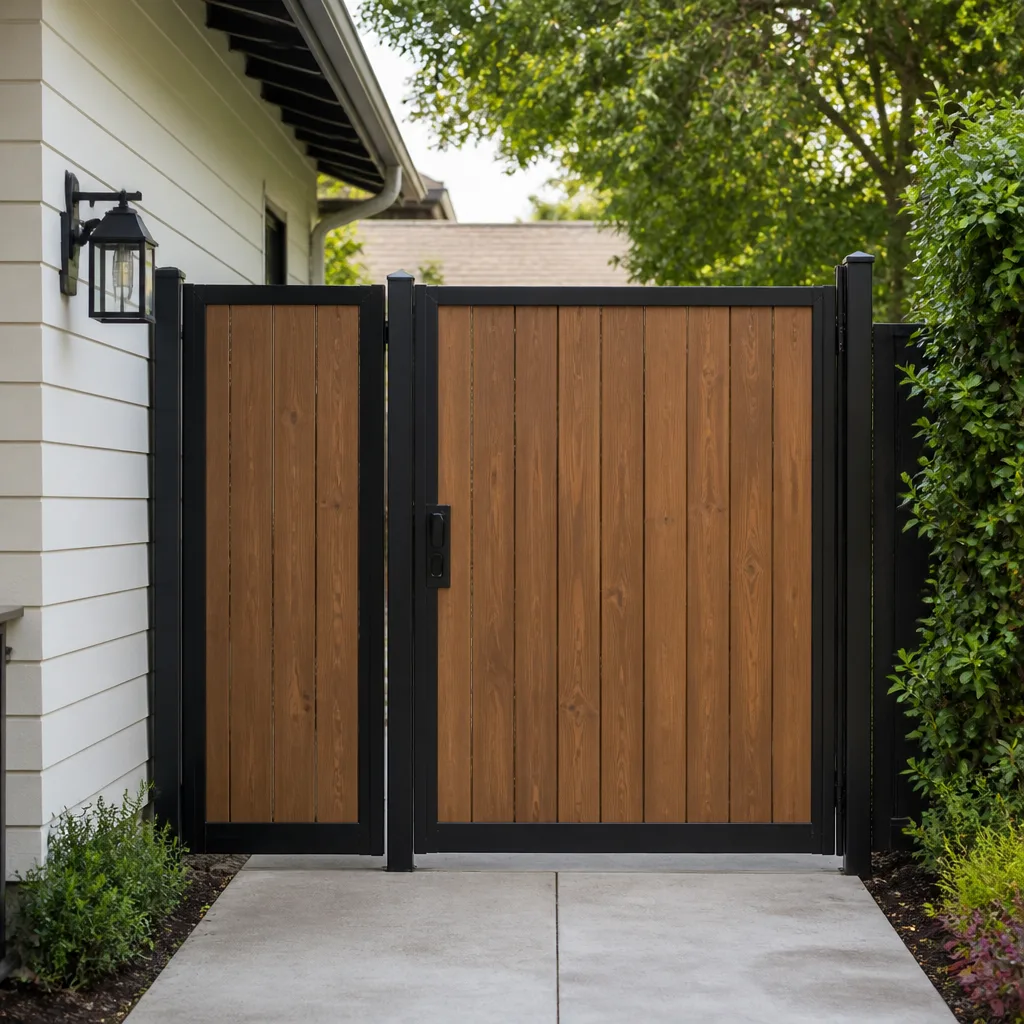 Wood & steel frame
 Farm & ranch
 Sliding driveway gates
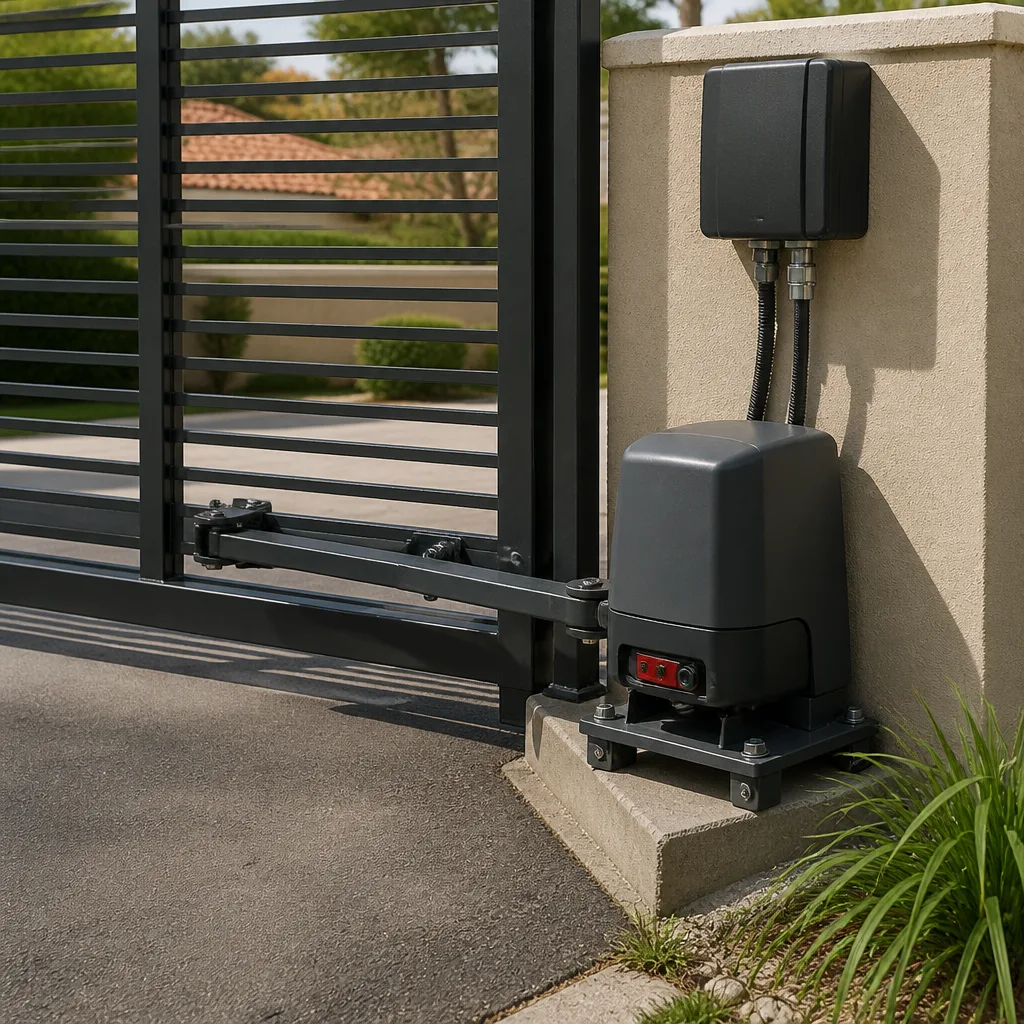 LiftMaster operators
Free on-site gate assessment - hinges, posts, and your LiftMaster or Nice gate operator checked before anything is quoted
The assessment is free and the quote is the invoice.
Get your free estimateSeasonal Gate Repair Care for Knoxville: Year-Round Homeowner’s Guide
Gate damage season in Knoxville doesn’t start in January. It starts in March, when a February of hard freezes and fast thaws leaves the ground shifting under gate posts that sat perfectly plumb all winter. The gate that closed cleanly in December suddenly drags, the latch won’t line up, and the operator starts straining against a geometry problem it was never built to overcome. Most homeowners blame the spring rain, or the motor, or the remote. Almost none of them look at the footing. That’s what this guide fixes. Below you’ll find a month-by-month care calendar built around Knoxville’s actual weather rhythms, the specific inspection points that catch trouble before it cascades into hinge and motor damage, and the operator prep that matters when temperatures drop.
Quick Answer
Seasonal gate care in Knoxville comes down to four threat windows: a February-March freeze-thaw cycle that moves footings and throws off gate geometry, a humid summer that swells wood and wears on circuit boards and photocells, a fall transition that is the highest-risk stretch for operator motor failures, and a pre-winter window for locking down hardware and preparing belt-drive and screw-drive operators for sub-freezing nights. Inspect the footing and posts twice a year (late winter and early fall), clear debris and test safety devices monthly, and service the operator before the first hard freeze. Most gate failures we see in Knoxville trace back to one of these windows being skipped, not to a part that wore out on its own.
Styles & brands we work with
- Wrought iron
- Wood & steel frame
- Farm & ranch
- Sliding driveway gates
- LiftMaster operators
Table of Contents
- Why Knoxville’s Climate Is Hard on Gates
- The Month-by-Month Gate Care Calendar for Knoxville
- February to March: The Footing and Post Inspection Protocol
- Summer in Knoxville: Humidity, UV, and the Sensors That Fail First
- The Fall Transition: Knoxville’s Highest-Risk Window for Operator Motors
- Pre-Winter Operator Prep: Belt-Drive vs. Screw-Drive
- The Monthly Five-Minute Walk-Around
- Brand-Specific Notes: Linear, Viking, Ghost Controls, DoorKing
Why Knoxville’s Climate Is Hard on Gates
Knoxville doesn’t get dramatic weather. That’s exactly why gates here fail in ways homeowners don’t expect. The damage comes from rapid transitions, not extremes. The soil in the Knoxville basin holds moisture well, and when a wet January is followed by a hard freeze, that moisture expands inside and around concrete footings. When it thaws a few days later, the footing doesn’t always return to where it started. Do that three or four times in a season and a post that was set correctly can end up leaning a fraction of an inch. That fraction is enough to bind a hinge, misalign a latch, or force an operator to push through resistance it wasn’t rated for.
Summer brings the opposite problem. Knoxville’s humidity sits high for months, and that moisture does two things to a gate system. It swells wood panels and wooden posts, which changes the clearances the gate was hung with. And it works its way into outdoor control boxes, operator housings, and the low-voltage wiring that runs to photocells and keypads. Circuit boards that live in that environment for years eventually show it. Add a summer UV index that stays high well into September, and you get the combination that ages photocell lenses, plastic housings, and rubber seals faster than most homeowners expect.
Then there’s fall. In our experience, the stretch from late September through the first cold snap is when the most operator motors give out in Knoxville. The reason is cumulative: a motor that ran hot through a humid summer, pushed against a slightly misaligned gate all season, and now faces leaf debris in the track and cooler, thicker lubricant is a motor running out of margin. The failure looks sudden. It rarely is.
None of this is a reason to expect your gate to fail. It’s a reason to inspect on a schedule that matches how Knoxville actually behaves. That schedule is what the rest of this guide lays out.
The Month-by-Month Gate Care Calendar for Knoxville
Generic seasonal checklists assume a national average. Knoxville’s windows are more specific than that, and timing your tasks to the right month is most of the value. Here’s the calendar we’d hand a homeowner who wants to stay ahead of problems rather than react to them.
- January: After any hard freeze, walk the gate through its full cycle by hand (operator disengaged) and listen for dragging or grinding. Check that the gate still latches without force. Note anything that changed.
- February: This is the month freeze-thaw does its worst work on footings. Watch for new gaps between post and concrete, soil that has heaved away from the base, or a gate that has started to sag on one side.
- March: Full footing and post inspection (the protocol is below). This is the single most important inspection of the year in Knoxville. Adjust hinges and latches only after the posts are confirmed stable.
- April: Spring hardware service: lubricate hinges, rollers, and track on slide gates, tighten all fasteners, and clean out anything winter pushed into the track.
- May: Operator service before the heat arrives. Clean the housing, check the control box for moisture intrusion, and test every safety device.
- June through August: Monthly five-minute walk-around (below). Watch photocells and keypads for fogging, condensation, or erratic behavior. Clear vegetation that traps humidity around the operator.
- September: The highest-risk operator window begins. Have the motor and drive inspected before fall debris adds load. Clear leaves from the track weekly once they start falling.
- October: Pre-winter operator prep (belt-drive and screw-drive steps are below). Test the manual release. Confirm the battery backup, if the operator has one, still holds.
- November: Final pre-freeze pass: tighten hardware, check seals, confirm the gate travels freely by hand with the operator disengaged.
- December: Cold-weather observation. Listen for new noises on cold mornings. Lubricants thicken in the cold, so a gate that suddenly sounds labored may only need service, not replacement.
If you only do two things on this list, make them the March footing inspection and the October operator prep. Those two catch the majority of problems before they turn into repairs.
February to March: The Footing and Post Inspection Protocol
This is the inspection that matters most in Knoxville, and it’s the one almost nobody does. The goal is to catch freeze-heave before it cascades into hinge damage, latch misalignment, and eventually operator strain. You’re not fixing anything here. You’re looking, and you’re noting what changed.
Work through it in order. Each step depends on the one before it.
- Disengage the operator first. Put the gate in manual mode so you’re testing the gate, not the motor. A powered gate can mask a binding problem by pushing through it.
- Walk the full swing or slide by hand. It should move smoothly with light effort. Any point where it drags, catches, or requires a push is a signal. Note exactly where in the travel it happens.
- Check the gate for plumb. A post that has heaved will show it as a gate that no longer hangs level. Look at the gap between the gate and the post at the top versus the bottom.
- Inspect the base of every post. Look for a visible gap between the concrete footing and the soil, soil that has pulled away from the post, cracks in the concrete, or a post that has started to lean. Any of these means the footing has moved.
- Check the hinges and hardware. A gate that has shifted puts load on hinges it wasn’t designed for. Look for bent hinge pins, elongated screw holes, or hinge plates pulling away from the post.
- Test the latch alignment. With the gate closed, the latch should engage without force. If you have to lift, push, or pull the gate to get it to latch, the geometry has changed.
- Only after all of the above, re-engage the operator and run a cycle. Listen for the motor working harder than it did in the fall. That’s the sound of a geometry problem transferring load to the drive.
Here’s the part most homeowners get wrong. When a gate starts dragging in March, the instinct is to adjust the hinges or the latch to make it close again. That treats the symptom. If the post has heaved, adjusting the hardware just masks a footing problem that will keep moving and eventually damage the hinges and the operator. Fix the footing, then the hardware. If a post has genuinely moved, that’s a footing repair, not a hinge adjustment, and it’s worth having it looked at before the season progresses.
One safety note that applies throughout this guide: gate operators run on line voltage and involve low-voltage control wiring, and a heavy gate panel under power can cause serious injury if it moves unexpectedly. We’re describing what to check, not how to service the electrical side yourself. Anything involving the operator’s power supply, control board, or wiring is work for a trained technician.
Summer in Knoxville: Humidity, UV, and the Sensors That Fail First
Summer is when the parts you don’t think about quietly age. The mechanical gate usually holds up fine through June, July, and August. It’s the electronics and the materials around them that take the hit. Knoxville’s humidity keeps moisture in the air and on surfaces for months, and the UV index stays high well into September. Together they shorten the life of the components that make a gate safe and convenient.
Photocells are the first to show it. A photocell is the safety sensor that stops or reverses the gate if something crosses its beam. On a Knoxville gate in summer, look for:
- Fogged or clouded lenses. UV degrades the plastic over time, and a clouded lens scatters the beam, which causes false trips or, worse, a beam that no longer reliably detects an obstruction.
- Condensation inside the housing. If you can see moisture behind the lens in the morning and it’s still there at noon, the seal has failed. That moisture is what corrodes the contacts and the circuit board behind it.
- Erratic behavior in humid weather. A gate that stops and reverses on its own, or refuses to close, more often in humid stretches, is usually telling you the safety circuit is compromised. Don’t ignore it and don’t bypass it.
Keypads and access-control panels face the same conditions. A keypad that works in dry weather and fails after a humid night has moisture in it. Control boxes with a failed gasket will collect condensation through the summer and show corrosion by fall. When we service a gate access control system, the housing seals and the wiring terminations get as much attention as the electronics themselves, because that’s where the failures start.
Two summer habits are worth building. First, keep vegetation trimmed back from the operator housing, the control box, and the photocells. Shade traps humidity and slows drying, and roots and vines can work their way into wiring. Second, wipe the photocell lenses clean once a month and look at them in good light. If they’re clouded or scratched, replace them. Photocells are inexpensive and they’re the part of the system that protects people.
Wood gates need their own summer attention. Humidity swells wood, which changes the clearances the gate was hung with. A wooden gate that starts to bind in July and frees up in October is showing you the seasonal movement, and it’s a reason to check hardware tightness in late summer before the swelling peaks.
The Fall Transition: Knoxville’s Highest-Risk Window for Operator Motors
If a motor is going to fail on a Knoxville gate, the odds are it happens between late September and the first hard freeze. That’s not a coincidence. It’s the point in the year when several stresses converge at once, and a motor that was already working near its limit runs out of room.
Here’s what’s actually happening. Through the summer, the motor ran in heat and humidity, pushing a gate that may have picked up a little resistance from swollen wood or a slightly moved post. Then fall arrives: leaves drop into the track and pile against the gate, the lubricant in the drive thickens as temperatures fall, and the gate starts getting cycled in cooler air with debris in its path. The motor is now doing more work in worse conditions than it did in July. A healthy motor handles that. A motor that was already marginal does not, and the failure looks sudden to the homeowner but has been building for months.
The fix is to get ahead of it. In September and October:
- Clear the track or the swing path weekly once leaves start falling. Debris in the path is the single biggest added load in fall. On slide gates, this matters most.
- Have the operator inspected before the cold arrives. A technician checks motor draw, drive wear, control board condition, and the manual release. This is the right time to catch a failing component.
- Test the safety devices again. Photocells and safety edges need to work reliably in cold, wet conditions. Fall is when they get tested by weather.
- Check the manual release. If the power fails or the operator quits, you need to be able to open the gate by hand. Test it now, not during a winter storm.
- Watch for new noises. Grinding, clicking, or a motor that sounds labored on cold mornings are early signals. A sound that appears in October is a warning; the same sound in January is often a repair.
We work on gate motor & opener systems every week in Knoxville, and the fall pattern is consistent. The calls that come in during a cold snap are usually motors that were showing signs in October. The homeowners who had them looked at in the fall are the ones who skip the emergency call.
Pre-Winter Operator Prep: Belt-Drive vs. Screw-Drive
Not every gate operator handles cold the same way, and the prep that matters depends on what kind of drive it has. Knoxville winters aren’t brutal, but they bring enough hard freezes to matter. The goal before the first freeze is to make sure the operator isn’t fighting the cold on top of everything else.
Belt-drive operators are common on residential swing gates, and they’re the more cold-tolerant design. The belt doesn’t thicken much in the cold the way grease-based drives can, so the main winter prep is checking belt tension and condition. A belt that’s loose will slip under load; a belt that’s frayed or cracked will fail at the worst time. Inspect the belt for wear, confirm the tension is within spec, and clear any debris from the operator housing. Belt-drive units also benefit from a check of the pulleys and any bearings, since cold-thickened lubricant in a worn bearing adds drag.
Screw-drive operators are more sensitive to cold. The screw runs in lubricant, and that lubricant thickens as temperatures drop, which increases the load on the motor. Before winter, the screw should be clean and properly lubricated with the manufacturer’s specified product. Too much or the wrong lubricant is worse than the right amount of the right one in cold weather. Check the drive nut for wear and confirm the manual release works smoothly, because a screw-drive gate that binds in the cold is exactly the one you’ll want to open by hand.
Beyond the drive type, a few prep steps apply to every operator before winter:
- Confirm the manual release operates freely. Cold weather is when you’re most likely to need it.
- Test any battery backup. Cold reduces battery capacity, and a backup that passes a summer test can fail in January.
- Check the control box seals. You want it dry going into freeze season. Moisture that freezes inside a control box can damage the board.
- Run a full cycle with the operator engaged and listen. The gate should move smoothly from fully open to fully closed. Any hesitation is worth investigating now.
If you’re not sure what type of drive your operator has, that’s a good reason to have it looked at. It’s information you’ll want on hand the first cold morning the gate hesitates.
The Monthly Five-Minute Walk-Around
Between the seasonal tasks, a short monthly check catches most problems early. It takes about five minutes and it’s the difference between catching a worn part and replacing a motor. Do the same steps every month so you notice what’s changed.
- Watch and listen through a full cycle. Open and close the gate once with the operator engaged. Listen for new noises and watch for hesitation or jerky movement.
- Check the safety devices. Break the photocell beam by hand and confirm the gate responds as it should. On a slide gate, test the safety edge if it has one.
- Clear the path. Debris, leaves, and vegetation in the track or swing path add load to the operator. A few seconds with a broom or a rake is the cheapest maintenance there is.
- Look at the hardware. Glance at the hinges, bolts, and brackets for anything loose, missing, or bent.
- Look at the posts and footing bases. Any new gap between post and concrete, or soil pulled away from the base, is worth noting.
- Test the manual release. Confirm the gate opens by hand with the operator disengaged.
If any step shows a problem, don’t wait for the next season to deal with it. Small problems on a gate have a way of compounding. A loose hinge adds load to the motor. A misaligned latch wears the strike. A failed photocell stops being a minor annoyance and becomes a safety issue. When something doesn’t look right, gate repair is the right call before the problem spreads.
Brand-Specific Notes: Linear, Viking, Ghost Controls, DoorKing
Every brand has its own habits, and knowing them is a big part of diagnosing a seasonal problem quickly. We’re experienced with nine major gate brands, spanning everything from residential driveway operators to high-cycle commercial systems, and the seasonal patterns differ between them.
Linear operators are common on residential and light commercial gates, and their control boxes are worth checking for moisture every summer. In Knoxville humidity, a failed gasket on a Linear control box shows up as intermittent behavior before it becomes a hard failure. Seal checks in spring pay off through the summer.
Viking systems appear on both residential and higher-cycle commercial gates, and their mechanical components deserve a careful fall inspection. Because they’re often installed on gates that see heavy use, the fall transition is the window where a worn part that held up through summer starts to show. Check the drive and the hardware before the cold sets in.
Ghost Controls is a residential swing-gate brand, and its operators are popular on homeowner driveways. Belt and hardware condition matter most on Ghost Controls systems going into winter, and the manual release should be tested before freeze season. Summer UV on the control housing is worth a look, too.
DoorKing systems are high-cycle commercial and access-control equipment, and their seasonal care centers on the control and access electronics. On a commercial gate, the access-control panel, keypads, and safety devices get the summer moisture attention that a residential operator’s control box gets. On a DoorKing gate at an HOA or a business, the fall inspection should include every access point, not just the operator.
Across every brand, the same principle holds: the parts that fail first are the ones exposed to weather. Whether it’s a residential Ghost Controls operator or a high-cycle DoorKing system, the seasonal inspection is your best defense. When a brand-specific part does fail, we carry parts for the brands we service, so a repair doesn’t stall waiting on an order.
Common Mistakes to Avoid
- Adjusting hinges to fix a dragging gate before checking the footing. If a Knoxville gate starts dragging in early spring, the footing has usually moved, not the hinges. Adjusting the hardware first masks the real problem and lets it get worse through the season.
- Bypassing or ignoring a photocell that acts up in humid weather. A sensor that trips falsely in summer is telling you the beam is compromised. Bypassing it to get the gate to close removes the safety feature that protects people.
- Waiting for the fall cold snap to service the operator. The fall transition is the highest-risk window for motor failure. Servicing the operator in September or October is far better than discovering a problem in January.
- Skipping the manual release test until you need it. A manual release that’s seized or difficult is a problem you discover at the worst possible moment. Test it in the fall and again before any freeze.
- Letting fall leaves pile up in the track. Debris in the path is the biggest added load on a slide-gate operator in autumn. Clearing it weekly is the simplest way to protect the motor.
- Treating a gate like a fence and calling a generalist. Gates involve mechanical geometry, low-voltage controls, line voltage, and safety devices. A contractor who doesn’t work on gates every day will diagnose the mechanical side and miss the electronics, or vice versa.
- Confusing a humidity problem for a failed board. A control board that misbehaves in Knoxville summer humidity may just need a seal and a dry-out. Replacing electronics before finding the moisture source is a common and costly mistake.
See the difference
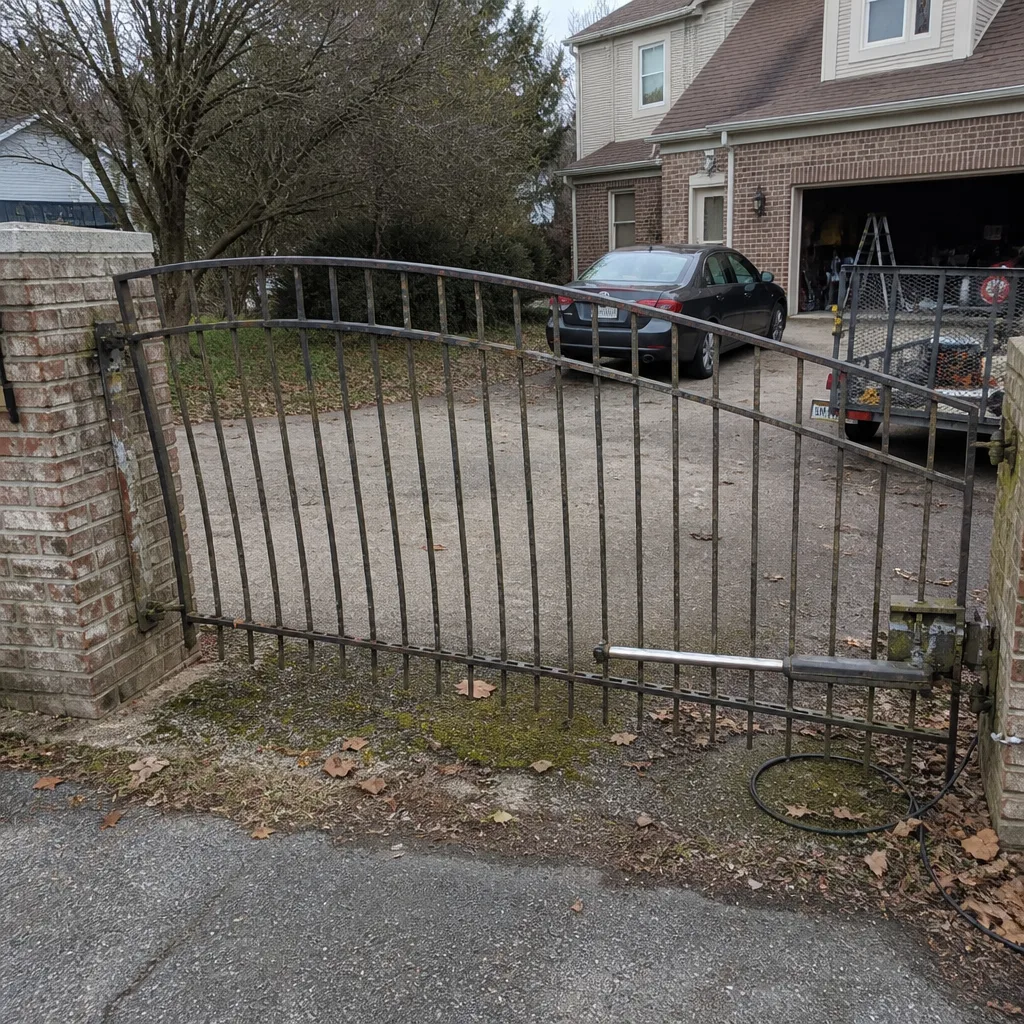 Before
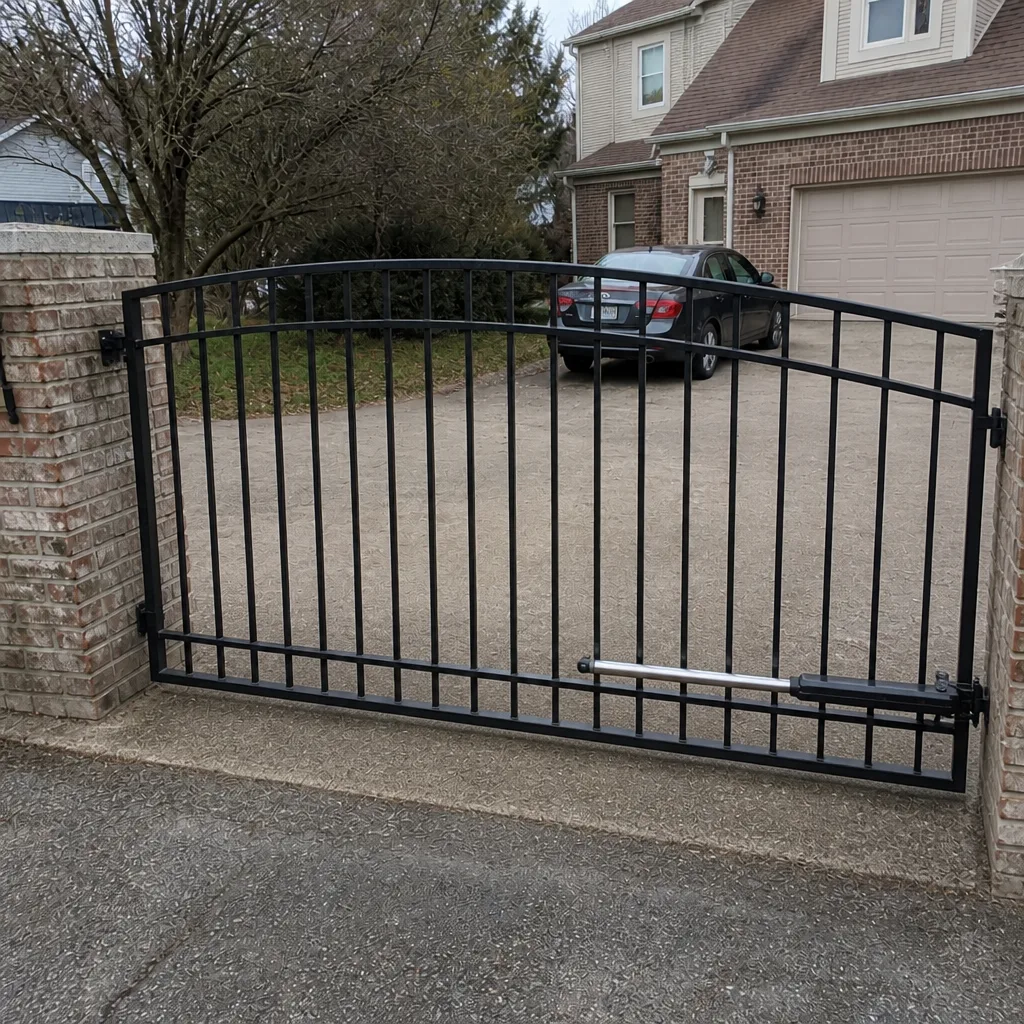 After
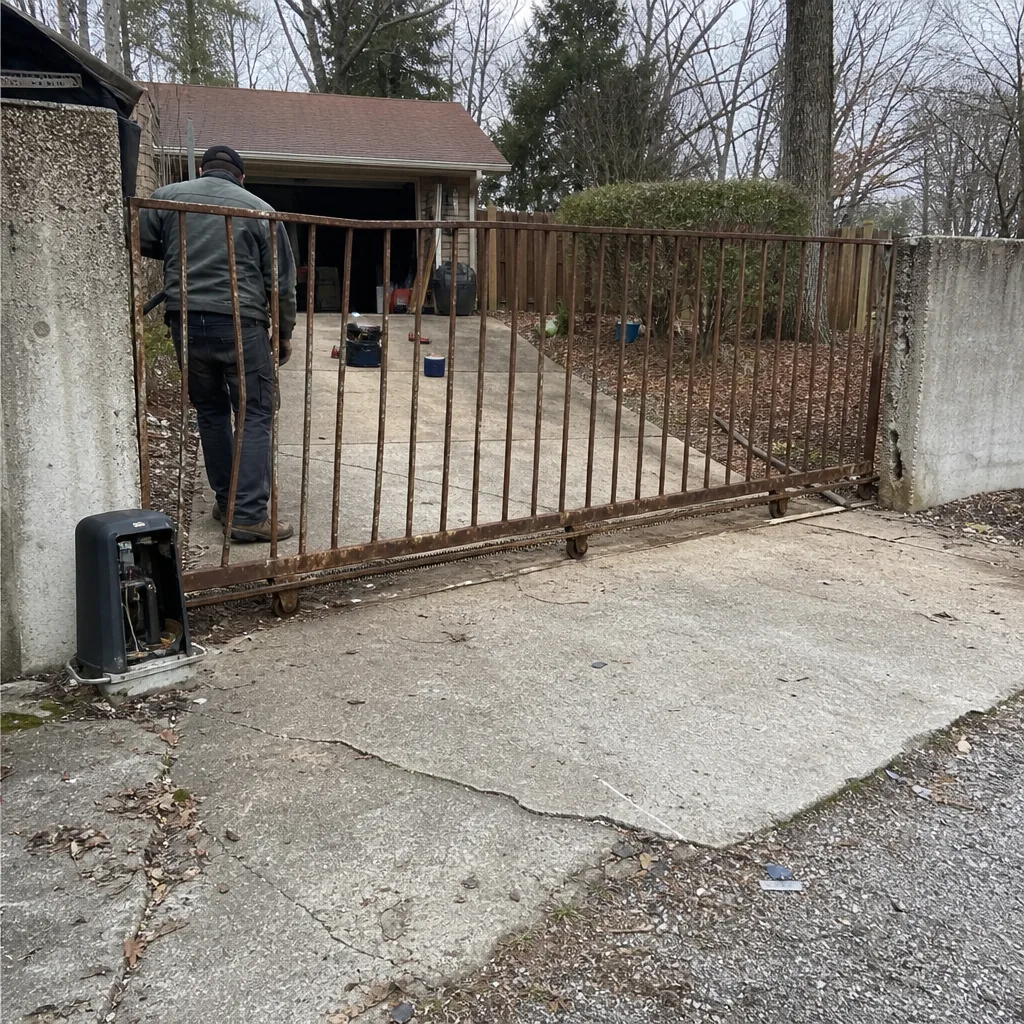 Before
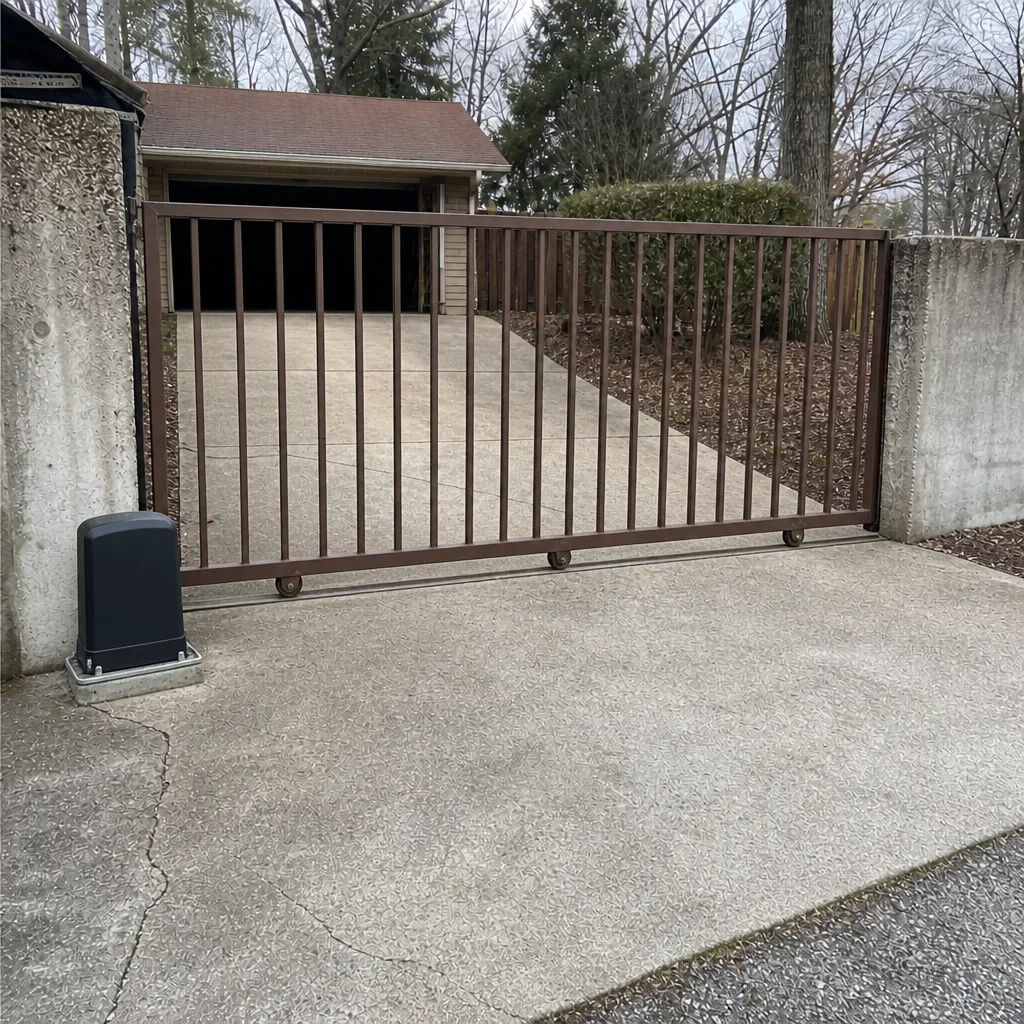 After
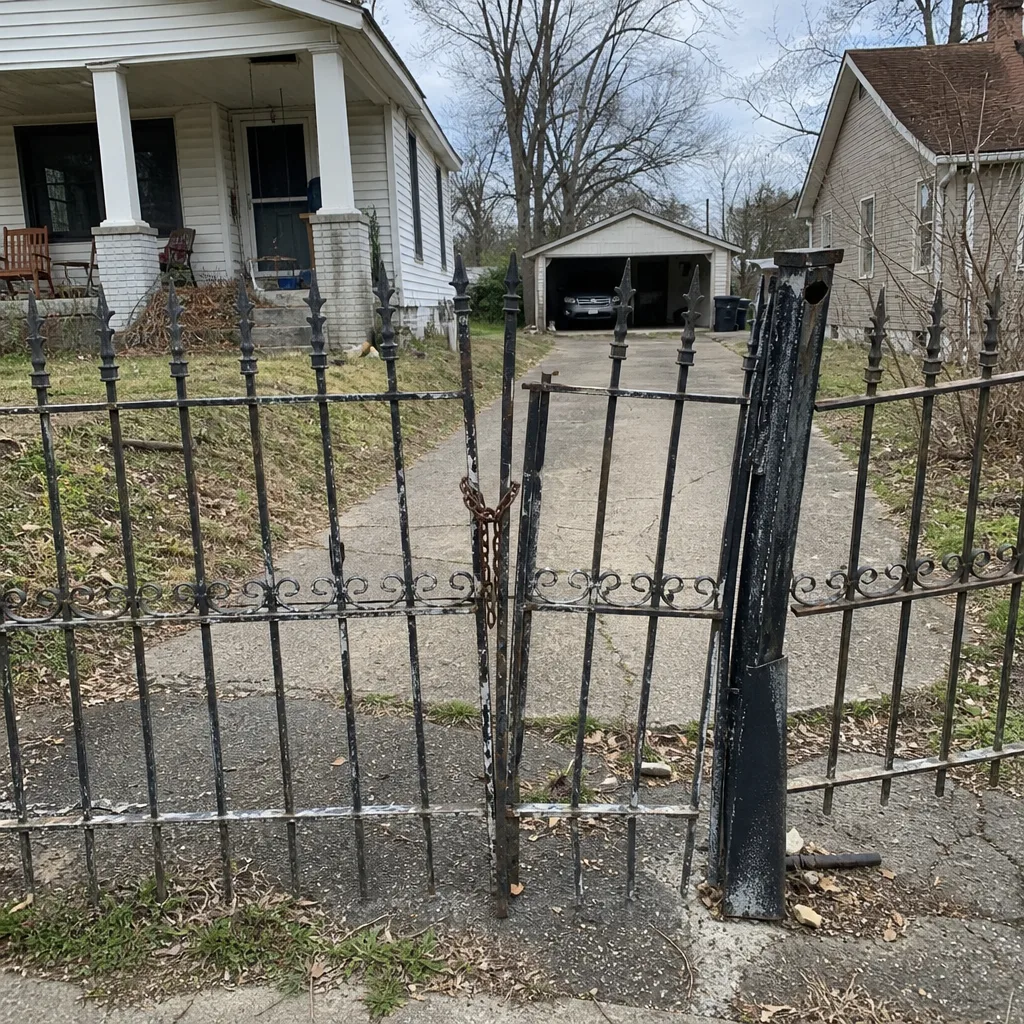 Before
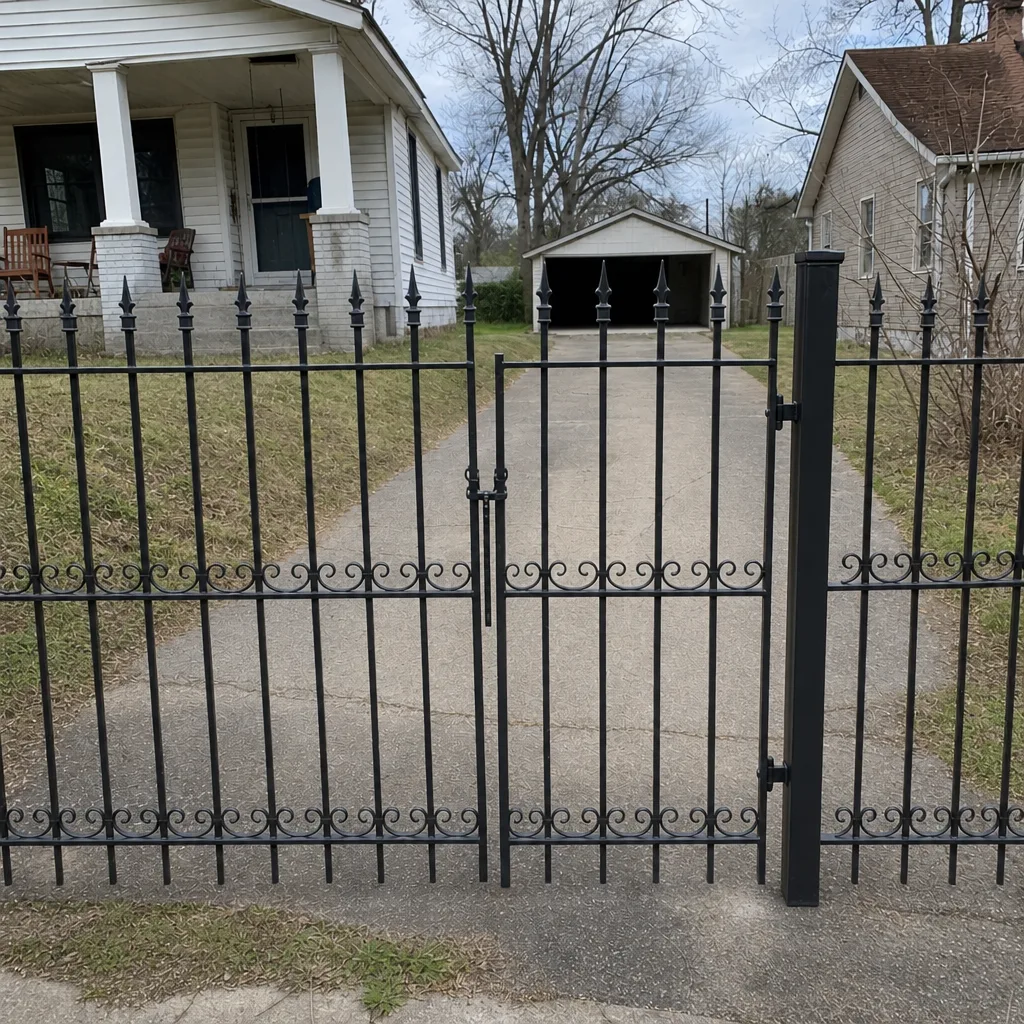 After
When to Call a Professional
Some seasonal tasks are homeowner-friendly: clearing debris, wiping photocells, testing the manual release, listening for new noises. Others need a trained technician. Call a professional if the gate has stopped latching cleanly, if a post has visibly moved or heaved, if the operator hesitates or strains, if a safety device fails its test, if a control box shows corrosion or moisture, or if anything involves the operator’s power supply or control wiring. Any of those could be a small fix or the early sign of a bigger problem, and the diagnosis matters more than the repair.
Knoxville Gate Repair is a gate-only specialist, and we handle repair, gate installation, motor and opener service, and access-control work for homes, HOAs, and commercial properties across Knoxville. Our technicians have up to 14 years of experience, and we carry parts for the brands we service. Free estimates are available in Knoxville; call (844) 625-7626 and we’ll take a look and give you a straight answer on what needs doing.
Frequently Asked Questions
The February-March footing and post inspection. That’s when freeze-thaw is most likely to have moved a post just enough to throw off gate geometry. Catching it early, before it loads the hinges and the operator, is the single highest-value thing you can do in a Knoxville gate care year.
Fall is when several stresses converge: summer heat and humidity have already taken a toll, leaves drop into the gate path, and cooler temperatures thicken the lubricant in the drive. A motor that was working near its limit in July runs out of margin. Servicing the operator in September or October is the best way to get ahead of it.
Do a five-minute walk-around monthly, a footing and post inspection in late winter, a full hardware and operator service in spring, and pre-winter operator prep in the fall. That’s a simple schedule, and it catches nearly every seasonal problem before it becomes a repair.
Humidity works its way into control boxes, operator housings, and safety sensors. It clouds photocell lenses, causes condensation inside housings, and corrodes contacts. The parts that fail first are the ones exposed to weather, so seal checks in spring and monthly sensor cleaning through summer make a real difference.
You can handle the homeowner-friendly tasks: clearing debris, wiping photocell lenses, testing the manual release, listening for new noises, and checking hardware for looseness. Anything involving the operator’s power supply, control board, footing assessment, or repair is work for a trained technician, because a powered gate with a heavy panel can cause serious injury.
Yes. A pre-winter inspection is when a certified technician checks motor draw, drive wear, seals, and the manual release. A component on the edge of failing often passes a summer check and fails in January, and the fall inspection catches it while the fix is still simple. Call (844) 625-7626 for an exact quote; estimates are free.
The Bottom Line
Knoxville’s gate damage comes from transitions, not extremes. A February freeze-thaw moves footings and throws off geometry. Summer humidity swells wood and wears on sensors and control boxes. Fall is the highest-risk window for motors, as summer stress, debris, and cold-thickened lubricant converge. A simple schedule handles all of it: the March footing inspection and the October operator prep are the two anchors, with a five-minute monthly walk-around in between. Whether your gate is a residential Ghost Controls driveway operator or a high-cycle commercial system, the seasons give you a warning before they give you a failure. Pay attention to it, and your gate will keep working through the year.
Knoxville Gate Repair offers gate repair, gate installation, motor and opener service, and access-control work across Knoxville. We’re a gate-only specialist, experienced with nine major brands, from LiftMaster and Linear to FAAC, BFT, Viking, Ghost Controls, DoorKing, Elite, and Mighty Mule. Call (844) 625-7626 for a free estimate. We’ll take a look, tell you what needs doing, and quote the price before any work starts.
Written by the team at Knoxville Gate Repair.